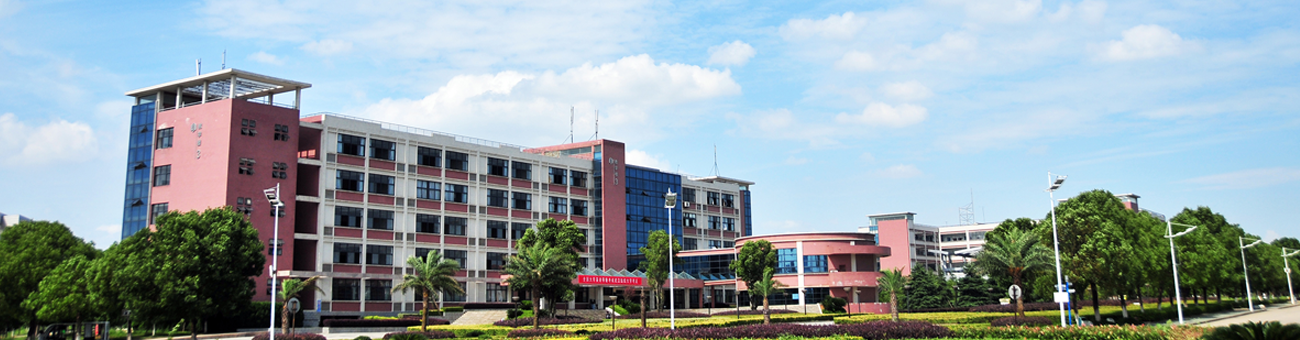
Over the 2023–2025 period, Prof. Jun Wan’s team at the School of Chemistry and Chemical Engineering, Wuhan Textile University has steadily evolved from a high-potential research group into a training-driven, outcomes-oriented platform that integrates frontier scientific inquiry with systematic talent cultivation. Anchored in electrocatalysis and functional fiber materials, the team has built a recognizable “research-to-education” pathway in which students learn by solving real problems at the interface of green chemical conversion, aerospace thermal management, and emerging lunar-regolith materials research, while developing the academic literacy needed to publish, compete, and progress to top programs.
Prof. Wan (Distinguished Professor; Assistant Dean; Associate Chair of Applied Chemistry) brings a cross-stage research formation spanning undergraduate to PhD and postdoctoral training at Huazhong University of Science and Technology, plus an overseas visiting scholarship at Nanyang Technological University. As a core member of Academician Prof. Weilin Xu’s team at the State Key Laboratory of Advanced Textile Materials and Processing, he has emphasized a mentoring philosophy that treats publications, projects, and competitions not as isolated achievements, but as structured training milestones that progressively build students’ experimental rigor, writing competence, and independent research judgment.
2023: Laying the mentoring scaffold while keeping research momentum
The 2023 year established the team’s mentoring baseline under conditions that demanded both flexibility and discipline. During an overseas visit, Prof. Wan maintained graduate training through online delivery of “Advanced Inorganic Chemistry”, while continuing hands-on supervision across thesis projects and class-level student management. In research, the group sustained high-quality output (including publications in venues such as One Earth) and combined this with international visibility through an invited English presentation in Singapore at a major conference setting. Just as importantly, the team’s service contributions to discipline construction and key platform applications began early, including participation in provincial key laboratory application work.
2024: Consolidation into a “training-through-research” model with measurable student outcomes
In 2024, the team’s talent-development mechanism became more explicit and measurable. On the graduate side, Prof. Wan served as a moral-education mentor and guided students to obtain two National Scholarships, embedding scholarship readiness within daily research training and academic communication routines. On the undergraduate side, the group combined early research exposure with formal innovation training: students obtained one innovation project, completed structured thesis supervision, and advanced toward publication-quality outputs. The year also marked a clear transition from “participation” to “co-authorship” for undergraduates, with five papers published as first or co-first authors under supervision, and graduate progression outcomes that included two recommendation-based admissions to 985 doctoral tracks and one Chinese Academy of Sciences joint-training placement. This mentoring impact was reinforced by a strong and stable research backbone. In 2024, the team reported 10 academic papers with Wuhan Textile University as first affiliation and Prof. Wan as first or corresponding author. The integration of high-level research with student training was visible not only in output volume but also in the team’s routine emphasis on conference communication and cross-team collaboration.
2025: Acceleration in both student “conversion rate” and platform-level contribution
By 2025, the team’s training pipeline demonstrated a notable acceleration, with undergraduate and graduate outcomes forming a coherent, upward trajectory rather than sporadic highlights. Undergraduates obtained a national-level innovation project, won a provincial second prize in the Challenge Cup, and earned a first prize at the Hubei Chemistry and Chemical Engineering achievements reporting event. The group also achieved an unusually strong publication conversion at the undergraduate stage, with 10 papers published as first or co-first authors under guidance. In parallel, progression to high-quality postgraduate destinations remained steady: admissions included Wuhan University, Northwestern Polytechnical University, and the University of New South Wales, together with additional placements in 211-level institutions. Recommendation-based admissions further underline the competitiveness of the cohort, including successful placements to Huazhong University of Science and Technology and China University of Geosciences. Graduate training showed the same “structured growth” pattern. In 2025, the team supported a graduate student to obtain a university-level top-notch innovation project and guided one National Scholarship award, alongside multiple excellence recognitions. PhD-track progression also strengthened, with recommendation-based doctoral admissions to Hunan University and ShanghaiTech University. At the platform level, Prof. Wan’s responsibilities extended beyond laboratory boundaries. In teaching and education reform, 2025 included undergraduate instruction across multiple core courses and graduate teaching delivered on two parallel platforms (the School and the national laboratory), alongside approval of a university-level graduate teaching reform project, editorship of an international education monograph, and two international pedagogy papers as corresponding author. In research funding and output, the year included new approvals for a Hubei Natural Science Foundation General Program and a key laboratory open project, with 21 papers published, all with Wuhan Textile University as first affiliation and Prof. Wan as first corresponding author.
A measured national-level milestone: Chang’e-5 lunar regolith research participation
While the team’s identity is built on long-term education and sustained research performance, 2025 also included a nationally relevant step that reflects rising strategic engagement. Prof. Wan served as one of the executive leads involved in securing approval for the ninth batch of Chang’e-5 lunar regolith sample research projects, in coordination with Academician Prof. Weilin Xu’s team. The project is treated within the team as an opportunity to broaden students’ horizon toward mission-oriented science, rather than as a stand-alone accolade.
Across 2023–2025, the team’s development reads as a clear arc: from establishing mentoring structure under real constraints, to consolidating publishable research training, to achieving a high conversion rate of student effort into publications, awards, scholarships, and elite progression pathways. With continued focus on electrocatalysis, functional fibers, aerospace thermal management, and carefully integrated lunar-regolith research, Prof. Wan’s group is positioning itself as both a frontier research contributor and a reliable incubator of next-generation scientific talent.